The Biology of Everyday Life
A Vault Journal series exploring the molecular science behind familiar human experiences.
Why Does Recovery Feel Different as You Get Older?
From sleep and exercise to stress and everyday fatigue, recovery changes throughout life. The biology behind it is more complicated than it seems.
By The Vault Journal Editorial Team · Published September 13, 2026 · 8–10 min read
Published by The Vault Journal — A Bio Vault Labs Publication

You stay up too late. You push yourself harder than usual. You don't sleep enough.
At one point, bouncing back may have seemed almost automatic. Over time, many people notice that recovery doesn't always feel quite so effortless — a workout that lingers a day longer, a short night that costs more than it used to.
It's easy to summarize that experience with one word: aging.
But “aging” isn't really an explanation. It's a label we place over a process we haven't described yet.
Underneath that familiar feeling is a much larger biological story — one involving sleep, metabolism, tissue repair, immune signaling, hormones, cellular communication, and the way all of those systems shift, at different rates and in different people, across a lifespan.
So it's worth asking the question plainly: what is actually happening when the body “recovers” — and why can that process feel different over time?
What Do We Actually Mean by “Recovery”?
Part of what makes this question hard is that “recovery” isn't one biological process. It's a single word stretched across many different things happening at once.
Depending on the situation, the experience we call recovery can involve:
- Restoring energy balance — replenishing the fuel used during activity and returning metabolic processes toward baseline.
- Muscle and tissue remodeling — the ongoing breakdown and rebuilding of structural proteins after mechanical stress.
- Immune activity — signaling molecules that coordinate the response to tissue stress and its resolution.
- Nervous-system regulation — shifts in autonomic balance that influence alertness, heart rate, and perceived effort.
- Sleep — a structured biological state during which many restorative processes are organized.
- Endocrine signaling — hormones released on daily and situational rhythms that influence metabolism and tissue biology.
- Cellular repair and maintenance — routine quality-control processes that manage damaged proteins and organelles.
- Adaptation — the longer-term changes that make the same stress easier the next time.
When someone says “I haven't recovered yet,” they may be describing any combination of these. Sore legs, foggy thinking, low motivation, and a heavier-feeling body are not the same biological event, even when they arrive together.
That matters, because a word that covers many processes cannot be explained by a single mechanism.
Why Recovery Isn't Controlled by One Switch
It is tempting to imagine aging as a set of switches gradually turning off — one system dimming, then another. Biology rarely works that way.
The human body operates as a set of interconnected systems that communicate constantly. Muscle tissue is not isolated from the immune system; the immune system is not isolated from metabolism; metabolism is not isolated from sleep. Signals move between them continuously.
At a high level, that communication follows a recognizable pattern:[7]
- Cells release signals
- ↓
- Signals encounter receptors
- ↓
- Receptors influence intracellular pathways
- ↓
- Tissues respond
- ↓
- Multiple systems coordinate a physiological effect
This is closer to a network than a machine. And in a network, a change in one place can be buffered, amplified, or redirected elsewhere — which is exactly why aging biology resists simple summaries.
What Changes as We Age?
Researchers have described aging not as one process but as a set of interacting biological features — sometimes called the hallmarks of aging — that include changes in cellular maintenance, mitochondrial function, protein handling, intercellular communication, and stress responses.[1]
Several of these are relevant to the systems involved in recovery:
- Skeletal muscle — muscle mass and function change across adulthood, and the size of that change varies substantially between individuals.[6]
- Protein turnover — the balance between building and breaking down muscle protein is central to remodeling after activity, and its regulation is an active research area.[6]
- Mitochondrial function — mitochondria supply cellular energy and participate in signaling; changes in mitochondrial quality control are associated with aging biology.[5]
- Inflammatory regulation — a low-grade shift in inflammatory signaling has been described in aging populations and is often referred to as inflammaging.[3]
- Cellular senescence — some cells enter a stable non-dividing state and alter the signals they release, which can influence surrounding tissue.[4]
- Sleep architecture — the structure and continuity of sleep changes measurably across the lifespan.[2]
- Intercellular communication — the signaling environment between cells and tissues changes with age, which is itself listed among the hallmarks of aging.[1]
Three qualifications are essential here.
First, these changes do not happen at the same rate. A person may show pronounced change in one system and little in another.
Second, individual variation is large. Population-level findings describe averages, not individuals.
Third — and most importantly — normal biological aging is not a disease. Age-associated change and medical conditions are different categories, and conflating them produces bad science and worse advice. Nothing described here identifies something that is broken or in need of repair.
For the same reason, deterministic phrasing — “after a certain age, the body stops doing this” — misrepresents the evidence. Aging biology is gradual, variable, and shaped by many interacting factors.
Why Sleep Matters So Much
There may be no more universal demonstration of biology than a bad night's sleep.
One short night can change how the next day feels in almost every dimension: attention, mood, appetite, coordination, tolerance for effort. That breadth is the point. Sleep is not a passive pause; it is a biological state during which many regulatory processes are organized.
Sleep interacts with nervous-system function, endocrine rhythms, metabolic regulation, immune signaling, cognitive performance, and physical restoration — which is why disrupted sleep rarely produces a single, isolated symptom.[2]
Sleep also changes with age. Research in humans has documented age-related differences in sleep architecture and continuity, and has examined how those differences relate to other physiological and cognitive measures.[2] Those findings describe patterns across groups; they do not predict any individual's night.
This is a description of biology, not guidance. Sleep concerns belong in a conversation with a qualified clinician, not in a science article.
Why a Hard Workout Can Feel Different Over Time
Exercise offers a second familiar example, and a useful one, because the sequence is reasonably well characterized.
Physical activity imposes mechanical and metabolic stress. That stress generates signals. Those signals influence how tissue is remodeled. Over the following hours and days, structures are rebuilt and adjusted — and if the stress is repeated appropriately over time, the tissue adapts.
- Physical activity
- ↓
- Physiological stress
- ↓
- Signaling
- ↓
- Tissue remodeling and adaptation
- ↓
- Restoration
Within that sequence, muscle protein synthesis and degradation are continuously regulated, and how they respond to exercise remains an area of genuine scientific debate rather than settled arithmetic.[6]
Perceived recovery from a hard session is influenced by many variables at once: what the session actually was, training history, sleep, nutrition, inflammatory signaling, neuromuscular factors, and everything else happening that week. Age is one factor among these — not a coefficient that overrides the rest.
It follows that feeling slower to bounce back is not, by itself, evidence that anything is wrong. It is one perception, produced by many overlapping processes.
The Body's Communication Network
To go further, we have to go smaller — down to how cells actually talk to each other.
Cells communicate using signaling molecules. Broadly, these include hormones, neurotransmitters, cytokines, growth factors, peptides, and other molecules that carry information between cells.[7] Those categories overlap: they describe how a molecule is classified or where it acts, not a strict biochemical taxonomy. A single molecule can reasonably belong to more than one of them.
A useful way to picture it: the body behaves less like a machine with individual switches and more like a constantly changing communication network. Different tissues send messages. Other cells detect them. Receptors translate those messages into cellular responses.
Like every analogy, this one has limits. A communication network implies discrete messages with fixed meanings, while biological signals overlap in time, vary in concentration, and are interpreted differently depending on what else a cell is receiving. The analogy is a starting point, not a model.
Where Peptides Enter the Story
Only now does it make sense to talk about peptides — because peptides are a category of molecule *within* this signaling system, not a separate subject.
Peptides are not inherently exotic substances invented in laboratories. Many occur naturally in biology and participate in ordinary cellular communication every day.
At a high level:
- Peptides are chains of amino acids, shorter than proteins, joined by peptide bonds.[8]
- Some peptides function as signaling molecules, carrying information between cells and tissues.[7,8]
- Peptide signals can interact with specific receptors, which is how the message is received.[7]
- Different peptides do very different things — the functions are not related simply because the chemistry is.
- The word “peptide” alone tells you almost nothing about what a given molecule does biologically.
Well-studied examples exist throughout normal physiology. Peptide hormones participate in appetite and energy-balance signaling, for instance, and reviews of that literature describe a network of interacting signals rather than a single controller.[9]
If the distinction between peptides and proteins is unfamiliar, it's worth a detour: Peptides vs. Proteins: What's the Difference? covers the chemistry and the terminology.
This section is where a lot of writing on the internet goes wrong — pivoting from biology into products. We aren't going to. Nothing here concerns using, obtaining, or administering anything.
Signal → Receptor → Response
One concept underlies almost all of molecular signaling:[7]
- Signal
- ↓
- Receptor
- ↓
- Intracellular signaling
- ↓
- Cellular response
The important and frequently missed point is that binding to a receptor does not produce one universal outcome.
What happens next can depend on the receptor type, the cell type, the tissue, which intracellular pathways are engaged, concentration, timing, the physiological context, and what other signals that cell is receiving at the same moment.[7]
This is why the same signal can produce different effects in different tissues, and why describing a molecule as if it performed a single fixed action is a simplification rather than a description.
Why Scientists Study Peptide Signaling
Given all of that, peptide signaling is scientifically interesting for a straightforward reason: it is one of the ways biological systems coordinate themselves.
Researchers study peptide signaling systems to better understand endocrine communication, metabolism, tissue biology, appetite and energy balance, stress responses, growth and development, immune signaling, and neurological communication, among other processes.[7,8,9]
One caution deserves emphasis. Studying a pathway does not mean that manipulating that pathway is beneficial, safe, or appropriate. Understanding a mechanism and making a clinical recommendation are entirely different activities, held to different standards of evidence. The Vault Journal reports on the first; the second belongs to regulators and clinicians working from controlled human data.
Why There Is No Single “Recovery Molecule”
This brings us to the claim you will encounter most often, and the one the evidence supports least: that recovery can be reduced to one hormone, one peptide, one pathway, one supplement, or one biomarker.
It can't — and the reason is structural rather than a matter of missing data.
Recovery, as we've seen, is several overlapping processes coordinated across multiple systems. Aging biology involves many interacting features rather than one master pathway.[1] In systems like these, a molecule can genuinely participate in a process without being responsible for the outcome. Participation is not causation, and correlation with an outcome is not control over it.
This is the same reasoning that applies to a single striking result or a single dramatic photograph: a before-and-after can show change, but it cannot tell us what caused it. A compelling story about one molecule and a compelling image of one person share the same limitation — both describe an observation without establishing a cause.
Why Two People Can Recover Differently
Anyone who has trained, travelled, or worked alongside other people has noticed this: the same demand can land very differently on two individuals.
Those differences can reflect combinations of age, genetics, sleep, prior activity, nutrition, stress, environment, training history, general health, medications and medical factors, and ordinary biological variation between people.
None of this is a diagnostic checklist, and none of it can be reasoned backwards into a personal explanation. The useful conclusion is more modest and more scientific: biological variation is normal, and one person's experience does not predict another's.
What Science Still Doesn't Fully Understand
Honesty about uncertainty is part of reporting science accurately, and aging is one of biology's most complex research areas.
Well-supported findings exist. Aging involves multiple interacting biological features rather than one cause.[1] Sleep changes measurably across the lifespan.[2] Inflammatory signaling shifts in aging populations.[3] Senescent cells accumulate and alter their signaling environment.[4] Mitochondrial and metabolic changes are associated with aging.[5]
Much remains open. Researchers continue to investigate how aging pathways interact, why individuals age at such different rates, how senescence contributes to tissue-level outcomes, how mitochondrial quality control changes over time, how immune aging unfolds, how endocrine changes propagate through other systems, why aging proceeds differently in different tissues, and how molecular signaling is reshaped along the way.[1,4,5]
Those are active questions, not answered ones. Emerging findings in this field are frequently oversold — including, at times, by people with something to sell — and the distinction between an interesting mechanism and an established outcome is worth defending.
The Bigger Picture
Return to where we started: the familiar feeling of taking a little longer to bounce back from a late night, a hard session, a stressful week, or a stretch of poor sleep.
From the outside, it looks like one simple thing. Underneath it is an extraordinary biological network.
Recovery is not one process. Aging is not one switch. And peptides are not one solution. They are one class of molecules within a vastly larger system of biological communication.
Understanding that system is more interesting than reducing it to a single molecule — and considerably more scientifically useful.
We Notice Biology Before We Understand It
A rough morning. A workout that seems to linger. A stressful week that leaves us feeling drained.
We experience the outcome first. Science asks what happened underneath.
The answer rarely comes down to one molecule. Instead, recovery reveals something much more interesting about the human body: billions of cells coordinating, communicating, adapting, and changing over time.
That is the biology behind everyday life.
Reference
Key Terms
- Recovery
- Not a single biological process. An umbrella term for several overlapping processes — energy restoration, tissue remodeling, immune signaling, nervous-system regulation, sleep, and cellular maintenance — that follow physiological stress.
- Signaling molecule
- A molecule released by one cell that carries information to another. Hormones, neurotransmitters, cytokines, growth factors, and many peptides all function in this role, and the categories overlap.
- Receptor
- A protein that detects a specific signal and converts it into changes inside the cell. The same signal can produce different outcomes depending on the receptor and cellular context.
- Peptide
- A chain of amino acids linked by peptide bonds, shorter than a protein. Many peptides occur naturally and participate in normal cellular communication; the label itself does not describe a molecule's function.
- Cellular senescence
- A stable state in which a cell stops dividing and changes the signals it releases. Senescent cells accumulate with age and can influence the tissue around them.
- Inflammaging
- A term used in the research literature for the low-grade shift in inflammatory signaling described in aging populations.
- Hallmarks of aging
- A research framework describing aging as a set of interacting biological features — including altered intercellular communication, mitochondrial dysfunction, and cellular senescence — rather than one underlying cause.
References
- [1] López-Otín C, Blasco MA, Partridge L, Serrano M, Kroemer G. Hallmarks of Aging: An Expanding Universe. Cell. 2023;186(2):243–278.
- [2] Mander BA, Winer JR, Walker MP. Sleep and Human Aging. Neuron. 2017;94(1):19–36.
- [3] Franceschi C, Garagnani P, Parini P, Giuliani C, Santoro A. Inflammaging: A New Immune-Metabolic Viewpoint for Age-Related Diseases. Nature Reviews Endocrinology. 2018;14(10):576–590.
- [4] Di Micco R, Krizhanovsky V, Baker D, d'Adda di Fagagna F. Cellular Senescence in Ageing: From Mechanisms to Therapeutic Opportunities. Nature Reviews Molecular Cell Biology. 2021;22(2):75–95.
- [5] Amorim JA, Coppotelli G, Rolo AP, Palmeira CM, Ross JM, Sinclair DA. Mitochondrial and Metabolic Dysfunction in Ageing and Age-Related Diseases. Nature Reviews Endocrinology. 2022;18(4):243–258.
- [6] Ji F, et al. Resistance Exercise and Skeletal Muscle: Protein Synthesis, Degradation, and Controversies. European Journal of Applied Physiology. 2025.
- [7] Alberts B, Johnson A, Lewis J, Raff M, Roberts K, Walter P. General Principles of Cell Communication. In: Molecular Biology of the Cell. NCBI Bookshelf.
- [8] StatPearls [Internet]. NCBI Bookshelf. Biochemistry, Peptide.
- [9] Abdollahi S, et al. Peptide Hormones in Appetite Regulation: A Complex Network. Pharmaceuticals. 2026.
This article is for educational and informational purposes only. It does not provide medical advice, diagnosis, or treatment recommendations.
The Biology of Everyday Life / A Vault Journal Series
Back to the journalContinue Reading
Related Stories
Molecular Biology
Peptides vs. Proteins: What's the Difference?
Peptides and proteins are both built from amino acids, but they aren't interchangeable terms. Learn how chain length, sequence, folding, structure, and biological context distinguish them.
By The Vault Journal Editorial Team · 6–8 min read
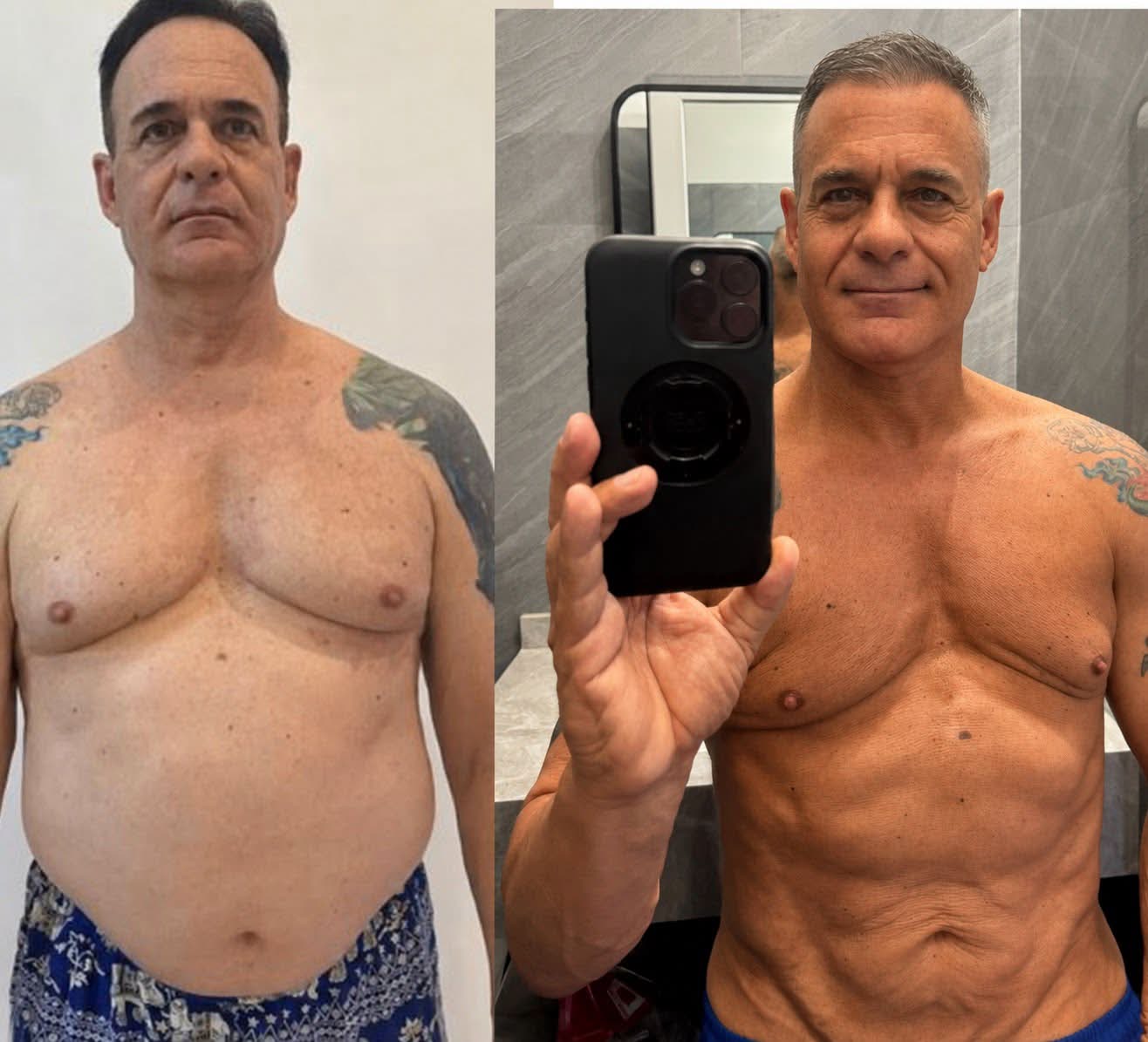
Research Guides
A Before-and-After Can Show Change. Can It Tell Us What Caused It?
A real transformation provides a striking visual. But when tesamorelin is part of the story, separating observation from causation requires looking beyond the photograph.
By The Vault Journal Editorial Team · 7–9 min read
Peptide Decoded
What Is Semaglutide? | Peptide Decoded #02
Semaglutide is a peptide-based GLP-1 receptor agonist. Explore how it interacts with GLP-1R, how receptor activation produces cellular signaling, and how peptide engineering changed its pharmacological properties.
By The Vault Journal Editorial Team · 7–9 min read